
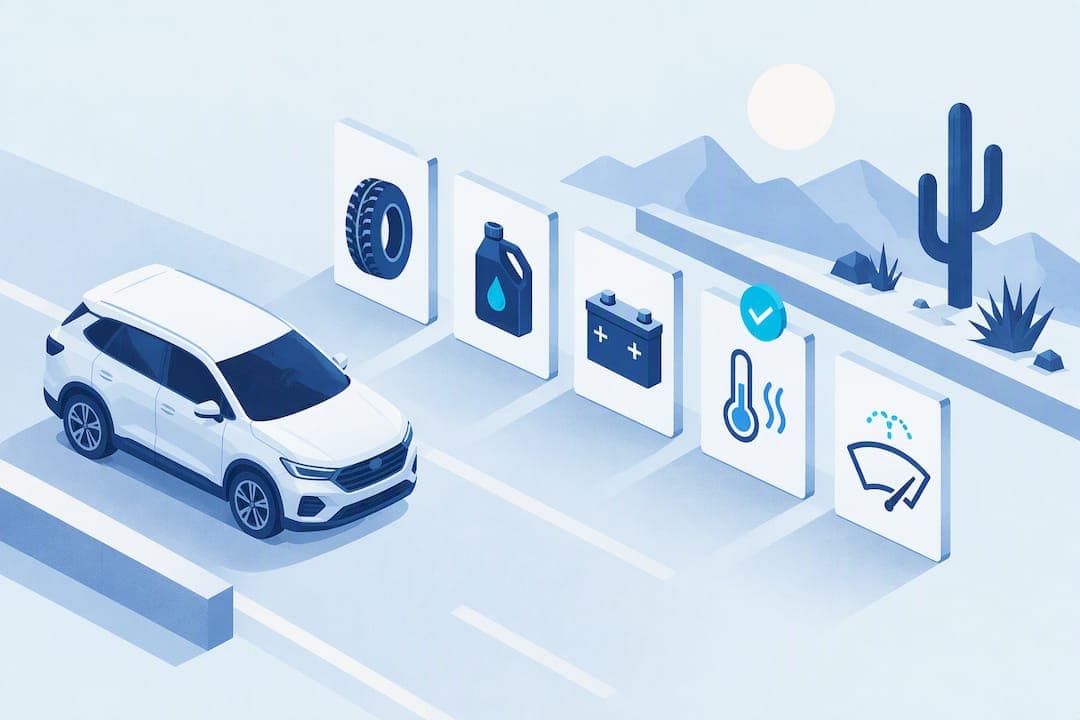
Before the real heat arrives, check your tires at the cold PSI listed on your door placard, test any battery older than three years, top off coolant, confirm your AC is blowing cold, and keep your fuel tank at least three-quarters full. Pack water and a basic emergency kit, and know the dust storm and flash flood rules before you drive. If you ever get stranded in extreme heat, stay put, run the AC if it's safe, and call for help rather than attempting repairs yourself.
TL;DR:
- Ensure tires are at cold PSI listed on the door placard and check pressure monthly, especially before long desert drives, to prevent blowouts.
- Test or replace batteries older than three years to avoid failure, especially since heat accelerates chemical degradation, and watch for signs like slow cranking or dim lights.
- Keep coolant topped off, inspect oil and fluid levels regularly, and never open a radiator cap on a hot engine to prevent burns and engine damage.
- Replace windshield wiper blades annually or if streaking occurs, and always use washer fluid rated for dust and bug residue to maintain visibility during dust storms and monsoons.
- Book professional detailing and ceramic coating early in the season to protect paint and interior from UV damage, dust, and debris, ensuring vehicle longevity in intense heat.
Table of Contents
- Arizona summer checklist: tires, battery, fluids, AC, and fuel
- Protect your paint and interior from sun and dust
- Driving through dust storms and monsoon flooding safely
- Build an emergency kit and know the stranded-in-heat protocol
- When to schedule service and what to ask a shop
- Checking and replacing windshield wiper blades before monsoon season
- Why brake performance changes in extreme heat
- Inspecting hoses and belts for heat-related wear
- Preventing overheating while idling in traffic
- Why preventive checks and professional detailing work better together
- Book a summer-ready detail before the heat peaks
- FAQ
- Sources
Arizona summer checklist: tires, battery, fluids, AC, and fuel
Arizona pavement can become extremely hot in July, and that heat punishes every system in your vehicle at once. Working through a short list now beats a breakdown on a shoulder with no shade later.
- Tires: Check cold PSI monthly against the number on your driver's door placard, not the number printed on the tire sidewall. NHTSA recommends checking pressure when tires are cold, since underinflation on hot pavement is a leading cause of tire failure. Inspect tread depth and your spare, and never release air from a tire that's already hot from driving; if you must adjust pressure while hot, add about 4 psi over the recommended cold setting as a rough offset.
- Battery: Heat accelerates the chemical reactions that wear out a battery faster than cold ever does. Industry guidance points to testing or replacing batteries three or more years old before summer, and slow cranking, dim headlights, or a swollen case are all warning signs worth acting on now.
- Fluids and cooling: Top off coolant, check oil level and condition, and inspect transmission and brake fluid. Never open a radiator cap on a hot engine; pressurized coolant can cause serious burns.
- AC: Run the system and confirm it blows consistently cold within a minute or two by following tips from Kwik Kar Van Alstyne on how to get your car's AC ready for the warm weather. Weak airflow or warm air after idling points to a refrigerant leak or compressor issue worth scheduling before a road trip.
- Fuel: ADOT advises keeping your tank at least three-quarters full during summer driving, since running low in a remote desert stretch turns a routine errand into a heat exposure emergency.
Pro Tip: Do these five checks on the same day each month, like the first Saturday, so they become a habit instead of an afterthought.
Protect your paint and interior from sun and dust
Arizona sun fades paint and cracks interiors faster than almost anywhere else in the country, and blowing dust turns a routine wash into a scratch risk if you handle it wrong.
- Use a windshield sunshade every time you park, even for short stops, and choose shaded spots or covered parking when you have the option.
- Rinse dust off with water before wiping; dragging a dry cloth across dust-covered paint grinds grit into the clear coat.
- Ceramic coatings and paint protection film both add a sacrificial layer that resists UV fading and makes dust and bug residue easier to rinse off, though neither eliminates the need for regular washing after heavy dust events.
- Leather and vinyl surfaces benefit from UV-blocking conditioners applied every few months; without them, dashboards and seats crack and fade noticeably faster under constant sun exposure.
- Window tint cuts interior heat and UV exposure, but check your state's film darkness limits before installing it.
Pro Tip: A five-minute rinse after a dust storm does more to protect your clear coat than a monthly wax ever will.
Driving through dust storms and monsoon flooding safely
Arizona's monsoon season runs from June 15 through September 30, and it brings two hazards that catch drivers off guard: haboobs that cut visibility to near zero in minutes, and flash floods that can float a vehicle in water far shallower than most people expect.
Blowing dust and haboobs tend to peak in late July and early afternoon into evening, which is exactly when many commuters are on the road. Knowing the pattern helps you watch the sky before you're caught inside a wall of dust.
If you hit a dust storm, follow this sequence:
- Pull as far off the roadway as possible, ideally past the emergency lane.
- Put the vehicle in park and set the parking brake.
- Turn off all lights, including hazards, so other drivers aren't tempted to follow your taillights into the same dust bank, a step the "Pull Aside, Stay Alive" campaign specifically recommends.
- Keep your foot off the brake pedal and stay inside with your seatbelt on until visibility returns.
Never drive through a flooded roadway. As little as 1 to 2 feet of moving water can float most passenger vehicles, so National Weather Service guidance is simple: turn around and find higher ground. Dust and monsoon storms also clog air filters, coat brake components in grit, and pit windshields, so a post-storm inspection of all three is worth the ten minutes it takes.
Build an emergency kit and know the stranded-in-heat protocol
A stranded vehicle in July heat turns dangerous within minutes, not hours, so your kit matters as much as your maintenance.
- Water for every passenger, plus extra for pets, and a cooler with frozen bottles that double as ice packs.
- A fully charged phone and a car charger or power bank.
- Sun protection: a wide hat, umbrella, and sunscreen.
- Basic first aid kit, flashlight, jumper cables, and simple hand tools.
If you break down, ADOT guidance is direct: avoid physical exertion like changing a tire in extreme heat, and call for roadside assistance instead. Run the AC while you wait if the engine is safe to idle, stay hydrated, and use your sunshade as improvised shade if you need to step outside briefly. Reserve 911 for medical emergencies; use roadside assistance or insurance dispatch for a flat tire, dead battery, or overheated engine with no injuries involved.
Pro Tip: Keep your emergency kit in the cabin, not the trunk, since trunk temperatures climb even higher and can damage medications, electronics, or food items.
When to schedule service and what to ask a shop
Spreading maintenance across the calendar beats cramming it all into one appointment right before a heat wave. Early June works well for AC and coolant service, late June is a good window for a pre-monsoon inspection, and tire and fluid checks belong on a monthly rotation all season long.
- Book a professional visit if your AC blows warm, your battery is three years or older with a slow crank, your engine runs hot in traffic, or you notice uneven tire wear.
- Ask a shop whether they check for AC refrigerant leaks specifically, not just recharge the system without diagnosing the cause.
- Ask about coolant flush intervals for your specific vehicle, since manufacturer recommendations vary.
- If you're considering ceramic coating, ask what warranty is included and what maintenance washing schedule keeps it valid.
- After a monsoon storm, ask whether an undercarriage rinse is included, since trapped grit accelerates corrosion on brake lines and suspension components.
Costs vary by vehicle and region, so get quotes from two or three local providers before committing to a larger job like coating or paint correction.
Checking and replacing windshield wiper blades before monsoon season
Dust is abrasive, and a windshield coated in grit turns ordinary wiper blades into sandpaper that scratches glass with every pass. Arizona's dry heat also dries out rubber blade edges faster than milder climates do, so a blade that looked fine in spring can be cracked and streaking by August.
Check your blades by running them with washer fluid on a dusty windshield. Streaking, skipping, or a visible chatter across the glass all mean it's time for new blades, and waiting until a monsoon downpour hits to find out is the wrong time to discover a problem. Replace both blades together, even if only one looks worn, since the rubber on both sides degrades at a similar rate under the same sun exposure.

Keep a bottle of washer fluid topped off and rated for bug and dust removal rather than plain water, since plain water alone doesn't cut through the oily residue that builds up on a dusty windshield. If your windshield already has pitting or chips from a prior dust storm, get it inspected before monsoon season; a small chip can spread into a crack fast once a wiper blade starts dragging grit across it repeatedly.
Why brake performance changes in extreme heat
Heat changes how your brakes behave, even when nothing is visibly wrong. Brake fluid absorbs moisture over time, and extreme underhood temperatures combined with aging fluid can lower its boiling point, which raises the risk of brake fade on long descents or in stop-and-go traffic under a Arizona summer sun.
A visual and functional brake check before summer road trips should cover pad thickness, rotor condition, and fluid color and level. Fluid that looks dark or has gone more than two years since its last flush is worth having tested, since most manufacturers recommend periodic flushes regardless of mileage. Soft or spongy pedal feel, grinding noise, or a burning smell after repeated stops are all signs to get brakes inspected before they fail at the worst possible moment.

Dust storms add another wrinkle: fine grit works its way past dust shields and into caliper components, accelerating wear on pads and rotors alike. A post-monsoon brake inspection catches this kind of hidden wear before it turns into a squealing rotor or a soft pedal on the highway.
Inspecting hoses and belts for heat-related wear
Rubber hoses and belts under your hood take a beating from Arizona heat that drivers in milder climates rarely have to think about. Constant high underhood temperatures dry out rubber, making it brittle, cracked, or soft to the touch well before a hose would normally need replacing in a cooler state.
Squeeze coolant hoses when the engine is cool: they should feel firm with a little give, not mushy, brittle, or swollen at the ends near the clamps. Look for cracking, fraying, or a shiny glazed look on serpentine belts, all signs that the rubber compound has started to break down under heat cycling. A belt that squeals on startup or when you turn the AC on is often one that's already slipping due to heat-hardened rubber losing its grip on the pulleys.

Replacing a cracked hose or a glazed belt before it fails costs far less than dealing with an overheated engine on the side of the road in July. Most manufacturers list recommended replacement intervals for serpentine belts, and Arizona's climate is a good reason to service belts and hoses on the earlier end of that range rather than the later end.
Preventing overheating while idling in traffic
Stop-and-go traffic in triple-digit heat is one of the hardest situations an engine's cooling system faces, since idling generates heat without the airflow that highway speeds provide to help the radiator do its job. A cooling system already weakened by low coolant, a worn fan clutch, or an aging thermostat is far more likely to push a temperature gauge into the red during a long red light than during normal driving.
If you notice your temperature gauge climbing while idling, turn off the AC and turn on the heater instead; it sounds uncomfortable, but it pulls heat away from the engine through the cabin's heater core. Shifting into neutral at a long stop can also help some vehicles, since it lets the engine run at a slightly different speed that may improve fan performance, though this depends on your specific vehicle and isn't universal.

If the gauge keeps climbing despite these steps, pull over somewhere safe as soon as possible and let the engine idle in park or shut it off entirely rather than continuing to drive on an overheating engine. Confirming your coolant level and fan operation before a summer heat wave, as covered in the checklist above, prevents most idling-related overheating before it starts.
Why preventive checks and professional detailing work better together
DIY checklists catch the basics, but some of what Arizona summers demand, like UV-blocking interior conditioning or a properly applied ceramic coating, benefits from a professional's tools and experience. Booking through a platform like Mobile Detail AI connects you with vetted detailers who track your vehicle's service history, so you're not guessing when your last coating or conditioning treatment was applied. On the provider side, built-in scheduling and route optimization tend to mean fewer missed appointments and more consistent service quality for customers waiting at home.
— Mobile
Book a summer-ready detail before the heat peaks
Between tire checks and dust storm rules, your to-do list is already long enough without chasing down a trustworthy detailer on your own. Through Mobile Detail AI, you can book exterior detailing, ceramic coating, paint protection film, and interior conditioning from vetted local providers, with instant scheduling and a complete record of every service your vehicle has had.

Every booking comes with service history tracking, so the next detailer you hire can see exactly what coating or treatment was applied last season. If you run a detailing business and want the same scheduling and route optimization tools your customers benefit from, our provider subscription plans start at $1 a month for the CRM-only tier. Find a provider near you and get your vehicle summer-ready before the next heat wave hits.
FAQ
How do I keep a car cool in 100-degree weather?
Park in shade or use a windshield sunshade every time, and crack windows slightly if your vehicle is left for an extended period in a safe location. Before driving, run the AC with windows down for the first minute to push out trapped hot air, then roll them up once the system starts blowing cold.
What color makes a car look expensive?
Deep, saturated colors like black, dark gray, and certain blues tend to read as more upscale because they show off body lines and reflect light evenly when the paint is well maintained. In Arizona, darker colors absorb more heat and show dust and water spots faster, so regular washing and a protective coating matter more for keeping that premium look.
What is the 30-60-90 rule for cars?
This isn't a standardized industry rule, and definitions vary depending on the source. Some use it loosely to describe staggered maintenance intervals, such as 30-day check-ins on fluids and tire pressure, but there's no single authoritative version of this rule to point to.
How hot does it get inside a car when it's 90 degrees outside?
Interior temperatures can climb far above the outside air temperature within minutes, even with windows cracked, which is why children and pets should never be left inside a parked vehicle. If you must leave a car during a hot day, a sunshade and parking in shade slow the temperature rise but don't eliminate the risk.
How often should I check my tire pressure in Arizona summers?
NHTSA recommends checking tire pressure monthly using the cold PSI figure listed on your vehicle's door placard, not the number on the tire sidewall. Checking more often during extended heat waves or before long desert drives adds an extra layer of protection against a blowout.