
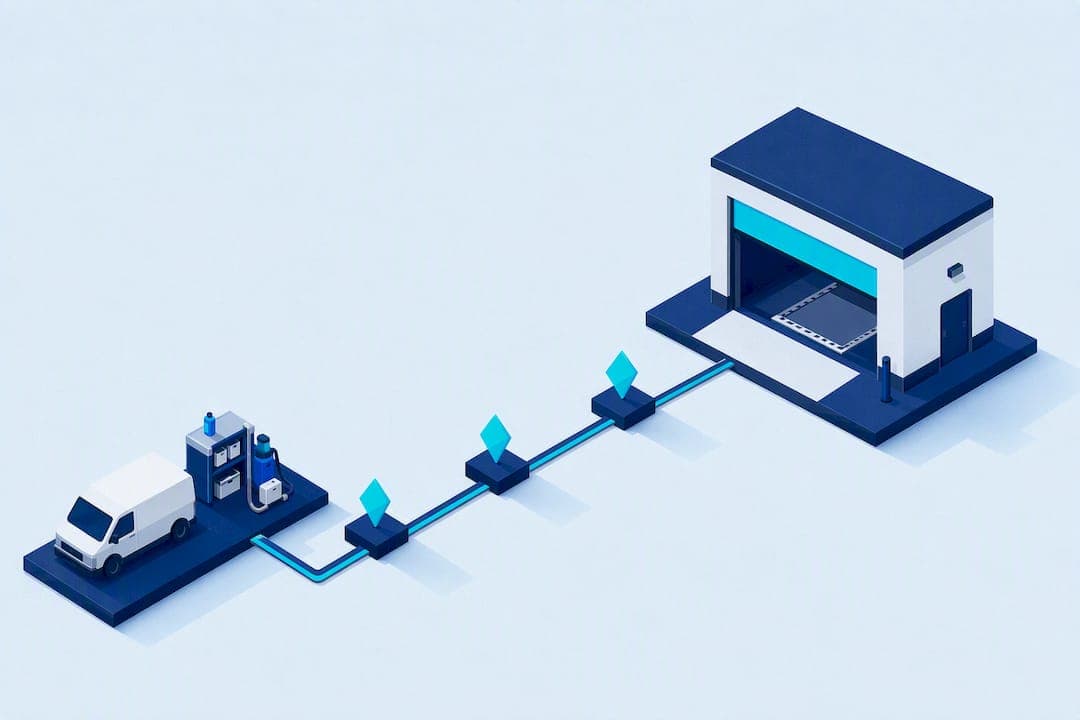
Start mobile. That's the right call for most solo and early-stage operators, since low overhead and flexible routes let you validate demand before you sign a lease. Move to a shop or hybrid setup once you're consistently turning away coating, correction, or PPF work, or your route density can't absorb more clients. Costs, day-to-day operations, and a transition checklist follow below.
TL;DR:
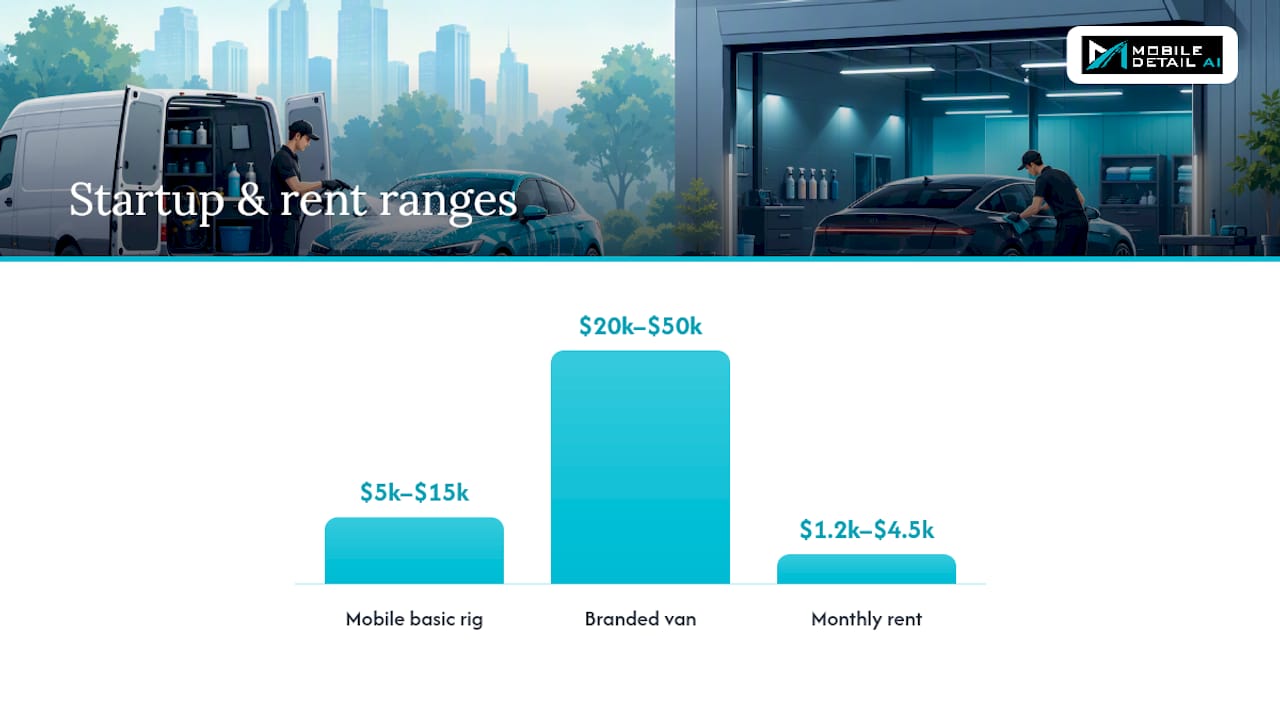
- Mobile setups cost between $5,000 and $50,000, while shops generally require $1,200 to $4,500 monthly rent plus utilities and permits.
- Solo operators should start mobile to keep overhead low and build a client base before investing in a lease, especially if average tickets are below $150.
- Transition to a shop or hybrid becomes financially viable once premium services like coatings or correction average over $400 per job and demand exceeds current capacity.
- Route optimization software is essential for mobile and hybrid models to minimize drive time and maximize billable hours, especially in dense markets.
- Manage legal and environmental compliance by confirming insurance, permits, wastewater rules, and water access before expanding or settling into a new operation stage.
Table of Contents
- Mobile, Shop, or Hybrid: Which Fits Your Business?
- What Do Mobile and Shop Detailing Actually Cost?
- What Changes Day to Day Between Mobile and Shop Work?
- When Should You Add a Shop or Go Hybrid?
- What Should You Check Before Your First 90 Days?
- Why Most Operators Get the Timing Wrong
- How Mobile Detail AI Supports Mobile, Hybrid, and Shop Operators
- Sources
Mobile, Shop, or Hybrid: Which Fits Your Business?
Every operator profile has a natural home. A solo detailer with one van and a growing client list belongs mobile, at least for now. A multi-van operation chasing volume in a dense metro benefits from mobile too, but needs tighter routing to stay profitable. A premium specialist doing paint correction and ceramic coatings almost always needs a controlled shop environment, and a franchise or fleet-service operator usually needs both.
Mobile detailing works because it keeps fixed costs low and puts you where the customer already is. The tradeoffs are real: weather cancels jobs, water access varies by property, and some premium services just don't work in a driveway.
Shop detailing gives you climate control, lifts, and dust-free bays, which opens the door to higher-ticket work. You trade that capability for rent, utilities, and a commute your customers now have to make.
Hybrid operations split the difference, running routes for maintenance work while reserving a small bay for coatings and corrections. It's more complex to manage but tends to be the most resilient long-term structure once demand supports it.
- Solo or new operator: start mobile, keep overhead near zero, and build a client base before spending on a lease.
- Multi-van business chasing volume: stay mobile, but invest early in route optimization software instead of a building.
- Premium specialist (coatings, correction, PPF): move toward a shop or shared bay almost immediately, since the equipment and environment control the outcome.
- Franchise or fleet operator: plan for hybrid from day one, since scale usually means serving both convenience clients and premium accounts.
A quick decision rule: if your average ticket is under $150 and your clients want convenience, stay mobile. If your average ticket climbs past $400 on corrections or coatings, start pricing out a bay.
What Do Mobile and Shop Detailing Actually Cost?
The gap between mobile and shop economics is bigger than most new operators expect, and it shows up before you ever open for business.
Mobile setups typically run $5,000 to $15,000 for a basic rig and $20,000 to $50,000 for a fully branded van, according to startup cost breakdowns for the detailing industry. Fixed shops require a much larger build-out on top of a monthly lease commonly ranging from $1,200 to $4,500 or more, plus utilities and permitting. That single line item, rent, is usually what breaks the math for a new shop owner who hasn't lined up recurring premium work yet.
The margin gap: Solo mobile operators commonly report gross margins of 60 to 80 percent, largely because there's no rent eating into every job. Shops can out-earn mobile operations in absolute revenue, but they carry heavier fixed overhead and a slower break-even timeline.
Ticket mix changes everything. A route full of $80 maintenance washes pays the bills but rarely funds a lease. A handful of $500 to $1,500 coating or correction jobs each month, though, can justify a modest bay on its own, according to detailing industry cost analysis.
Before signing anything, track these numbers for at least 60 to 90 days:
- Average ticket size across your current client base
- Percentage of jobs that are premium (coatings, correction, PPF) versus routine maintenance
- Monthly recurring revenue from repeat clients, not one-off bookings
- What a comparable lease actually costs in your specific market, not a national average
If premium demand doesn't clear roughly three to five jobs a month at your target price point, a lease is premature.
What Changes Day to Day Between Mobile and Shop Work?
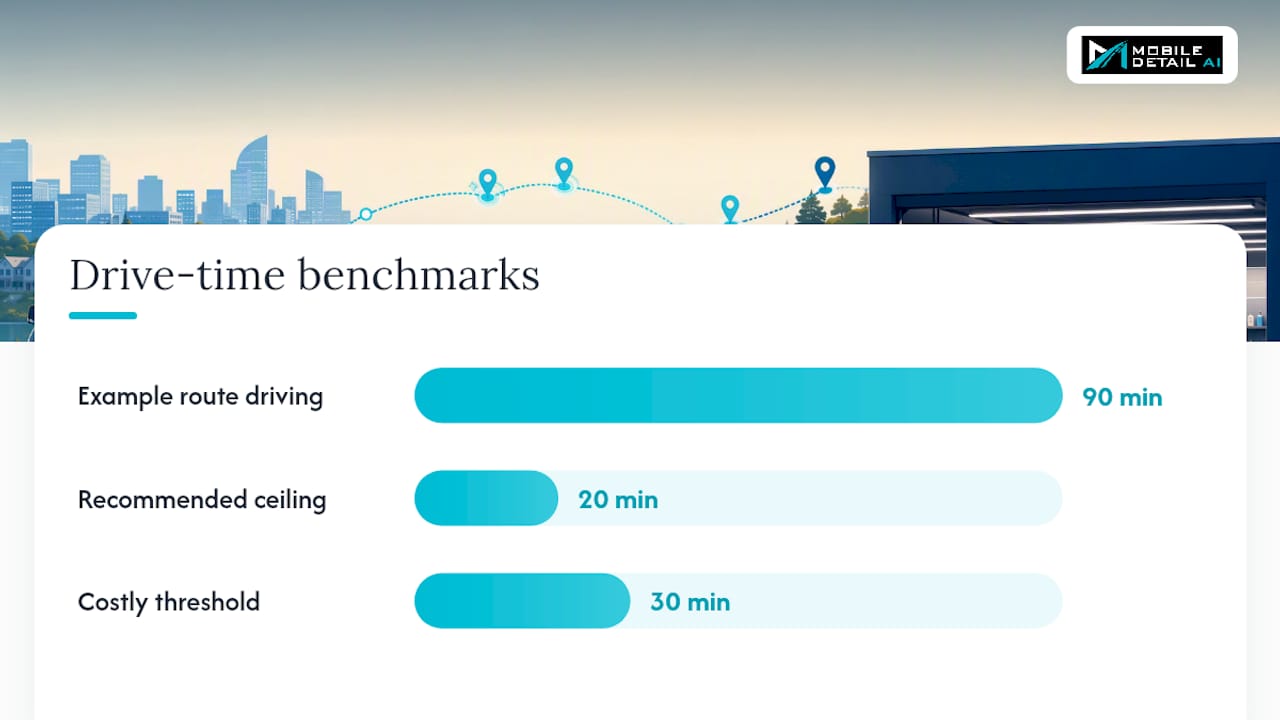
Route density decides how much of your day is billable. A mobile detailer who spends 90 minutes driving between three jobs is losing hours a shop-based detailer never has to think about. Optimized scheduling and a smart hub location can reclaim a meaningful chunk of that lost time, which is exactly the kind of margin leak that route-optimization software is built to fix.
Equipment draws a hard line between the two models. Mobile rigs run on generators, portable extractors, and water tanks. Shops get lifts, curing lamps, and dust-free bays, the kind of setup that makes multi-stage paint correction or ceramic coating installs practical rather than risky.
Staffing scales differently too. Adding a second mobile crew means buying another van and hiring someone who can drive and detail. Adding shop capacity means training technicians on stationary equipment and building a schedule that keeps bays full without overbooking.
Four operational factors worth locking down before you scale either model:
- Insurance: mobile operators need coverage for offsite work on client property; shops need general liability tied to a fixed location.
- Permits: local business licensing requirements shift depending on whether you operate from a vehicle or a storefront.
- Wastewater rules: local stormwater regulations can restrict where and how mobile detailers discharge gray water, and violations can shut down a route fast.
- Water access: shops solve this by design; mobile crews need a reliable plan for every job site.
Pro Tip: Map your service radius before you expand routes. A 20-minute drive-time ceiling from your hub keeps utilization high; push past 30 minutes regularly and you're paying for windshield time instead of billable work.
When Should You Add a Shop or Go Hybrid?
The signal is usually simple: you're turning away work you'd actually want. If callers keep asking for ceramic coatings or full correction jobs and you keep referring them elsewhere, that's lost revenue you could be capturing with the right space. A repeatable base of maintenance clients paired with a few premium requests a month is the classic trigger point.
Industry advisers generally recommend a staged approach: validate demand mobile first, then add fixed capacity only once the numbers support it.
- Stage 1: run mobile routes and track which services get requested most and at what price point.
- Stage 2: document actual margins by service type, not just total revenue, so you know which jobs are worth defending capacity for.
- Stage 3: lease a shared bay or small suite instead of a full standalone shop, which lowers your entry risk considerably.
- Stage 4: shift coatings, correction, and PPF work into that controlled space while keeping convenience jobs on the mobile route.
Keep the two workflows separate on your calendar so a premium install doesn't get bumped by a same-day wash request. Scheduling and route optimization tools can help here to manage split calendars without double-booking either side of the business.
What Should You Check Before Your First 90 Days?
Before you take a single booking, confirm your insurance covers offsite work, your local permits are filed, and you have a compliant plan for wastewater if you're washing on client property.
Once you're running, track five numbers weekly: total bookings, utilization rate (billable hours versus hours worked), drive time per job, average ticket size, and cancellation rate. These tell you faster than revenue alone whether your model is working.
- Confirm insurance, licensing, and wastewater compliance for your specific city or county.
- Set a service radius and stick to it for the first 90 days to protect route density.
- Track the five weekly metrics above and review them every Friday.
- Test one upsell (ceramic spray, interior protectant) on every booking to build attach-rate data.
Pro Tip: If cancellations run above 10 percent in your first two months, the problem is usually scheduling friction, not demand. Fix the booking flow before you touch pricing.
Why Most Operators Get the Timing Wrong
Most new operators either commit to a shop too early because it feels like "real" business, or they stay mobile too long out of fear of debt. Both mistakes come from skipping the same step: actually tracking ticket mix and margin by service type before making a real estate decision. The data almost always points to hybrid as the sturdiest long-term structure, but only after mobile operations prove which services your specific market will pay premium prices for. The honest tradeoff is that hybrid demands more coordination than either pure model, and that complexity is worth it only once the premium demand is real, not hoped for.
— Mobile
How Mobile Detail AI Supports Mobile, Hybrid, and Shop Operators
Whichever stage you're at, the scheduling problem doesn't go away, it just gets more complicated. This platform is designed for detailers managing routes, bays, or both, connecting customers to vetted detailers through instant booking while providing CRM tools to run the business behind the scenes.

Route optimization and intelligent scheduling features can help mobile crews cut drive time and keep utilization high, while CRM tools handle bay bookings for operators who've added shop capacity. Secure payment processing and real-time service updates can give customers a consistent experience, and vehicle history tracking helps technicians know what work has been done previously. If you're staging a transition from mobile to hybrid, Mobile Detail AI is worth checking out as the system that keeps both calendars from colliding. Set up your profile and see how the scheduling tools fit your current route.