

A mobile detailer needs four policies to operate legally and safely: general liability, commercial auto, garagekeepers, and inland marine for tools and equipment. Add workers' compensation once you hire anyone, and a business owner's policy (BOP) once revenue justifies bundling. The first move isn't picking a carrier. It's finding a specialty broker who understands detailing and can hand you a same-day certificate of insurance.
TL;DR:
- General liability covers slip-and-fall and third-party property damage, while commercial auto protects vehicles used for business, which personal policies do not cover.
- Garagekeepers insurance is essential for protecting client vehicles in your care, and inland marine covers portable equipment against theft and damage.
- Costs typically range from $500 to $1,500 annually for basic coverage, but can rise to $4,000 or more with added policies like a commercial van or garagekeepers.
- Clients usually require a certificate of insurance with additional insured status, primary wording, and specific liability limits, often around $1 million per occurrence.
- Proper recordkeeping of vehicle photos, chemical inventories, and equipment serial numbers can significantly reduce claims and speed up the claims process.
Table of Contents
- What Does Mobile Detailing Insurance Actually Cover?
- What Endorsements Do Mobile Detailers Actually Need?
- How Much Does Mobile Detailing Insurance Cost?
- What Do Clients Actually Require on a COI?
- How Do You Actually Get Covered?
- What Recordkeeping Actually Reduces Claims?
- Buying Coverage in the Early Years
- How Mobiledetail Helps You Stay Insurance-Ready
- Sources
What Does Mobile Detailing Insurance Actually Cover?
Each policy in your stack solves a different problem, and skipping one doesn't save money. It just moves the risk onto you personally.
General liability pays for the slip-and-fall at a client's driveway or the hose that soaks a customer's home office through an open window. It also covers third-party property damage that isn't tied to the vehicle you're detailing, which is more common than most new operators expect.
Commercial auto covers your van or truck for liability and physical damage while it's being used for business. Personal auto policies routinely deny claims once an insurer discovers the vehicle was generating income, so this isn't optional if you're driving a branded rig to job sites.
Garagekeepers coverage protects the customer's vehicle itself while it's in your care, custody, or control. This is the policy that pays when a buffer burns through a clear coat or when your trailer clips a bumper backing out of a driveway. Without it, general liability typically won't respond to damage on the car you were hired to clean.
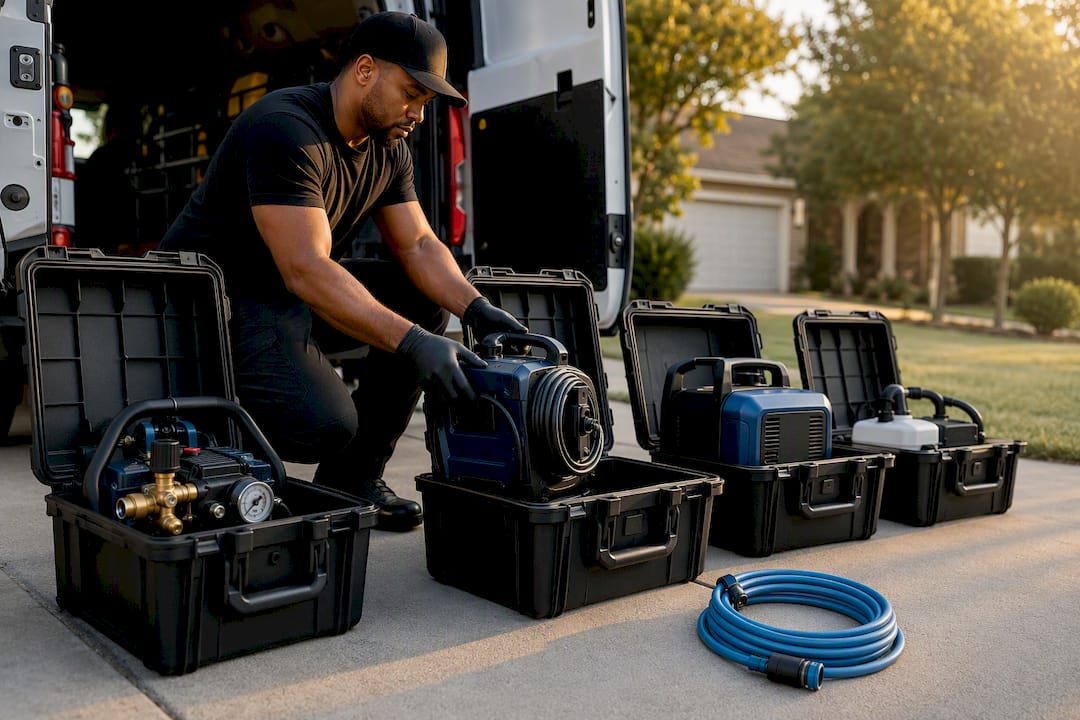
Inland marine (sometimes called a tools and equipment floater) covers portable gear like pressure washers, extractors, generators, and steam machines against theft or damage while they're in transit or staged at a job site. Standard commercial property forms don't follow equipment out of a fixed location, which makes this coverage essential for anyone carrying tools between jobs.
A BOP bundles general liability with property coverage and often costs less than buying each separately. Workers' comp becomes a legal requirement in most states once you add employees, and an umbrella policy makes sense once you're taking on higher-value fleet or dealership contracts.
What Endorsements Do Mobile Detailers Actually Need?
Standard policies leave gaps that only show up after something goes wrong. These are the ones that bite detailers specifically.
Completed operations and products liability matter most for anyone doing ceramic coating, paint correction, or window tinting. Damage that shows up days or weeks after service, like a coating that hazes or a tint film that bubbles, falls under completed operations rather than the general liability that covers you while you're on-site. A lot of policies exclude this by default unless you ask for it by name.
Pollution exclusions are another blind spot. Detailing chemicals, degreasers, and coating solvents can trigger a pollution exclusion in a standard GL policy. Keeping a documented chemical inventory with safety data sheets on file helps you negotiate this endorsement and speeds up any claim investigation later.
Other items worth checking:
- Hired and non-owned auto coverage if employees ever drive their own cars for supply runs.
- Trailer and cargo endorsements if you tow a rig loaded with pumps, tanks, or generators.
- Sublimits on garagekeepers coverage. Dealerships often require limits tied to the highest-value vehicle you might service, not your average job.
Pro Tip: Pull your last twelve invoices before renewal and check your garagekeepers limit against the most expensive car you actually touched. A $50,000 sublimit doesn't help much the day you're detailing someone's Rivian.
How Much Does Mobile Detailing Insurance Cost?
Pricing depends heavily on what you're insuring and where you operate, but there are useful benchmarks. A solo operator carrying general liability and a tools floater typically pays $500 to $1,500 a year. Add a commercial van and garagekeepers coverage, and that range moves to roughly $1,500 to $4,000 annually. The Hartford publishes similar sample ranges for BOP, general liability, workers' comp, and professional liability that detailers can use to sanity-check quotes.
Premiums move based on your vehicle count, payroll, annual revenue, and how much of your work involves coatings or tinting, since completed operations exposure raises risk. Territory matters too. Insurers price traffic density and claims frequency by state, so a quote in Phoenix won't match one in a denser metro market.
You can lower your number by bundling policies into a BOP, raising your deductible if you have cash reserves, and keeping declarations accurate. Underreporting revenue or vehicle count to save on premium is the fastest way to get a claim denied later.
What Do Clients Actually Require on a COI?
A certificate of insurance is a summary document your insurer issues showing active coverage, limits, and effective dates. It's not the policy itself and it doesn't grant coverage. It's proof for a property manager, dealership, or fleet client that you're covered before they let you on-site.
Commercial clients typically ask for a specific package of things:
- Additional insured status, naming the client on your policy for claims arising from your work.
- Primary and noncontributory wording, meaning your policy pays first before theirs is touched.
- A waiver of subrogation, which stops your insurer from coming after the client after paying a claim.
- Specific cancellation notice language, often 30 days' written notice before your policy lapses.
- Limits around $1 million per occurrence and $2 million aggregate for general liability, with garagekeepers limits scaled to the vehicles you'll service.
Your agent needs your business name exactly as licensed, the client's name and address, and the requested limits to turn a COI around same day in most cases.
How Do You Actually Get Covered?
Getting an accurate quote fast comes down to walking in prepared. Have these ready before you call an agent:
- Vehicle VINs for any van, truck, or trailer used in the business.
- An equipment list with replacement values for buffers, extractors, generators, and pressure washers.
- A breakdown of services offered, flagged clearly if any involve coatings or tinting.
- Annual revenue, payroll figures, and copies of any standing commercial contracts.
- Loss runs from your prior carrier if you're switching coverage.
Ask agents directly how they handle completed operations for coating work, whether inland marine equipment gets scheduled individually or as a blanket limit, and how fast they can turn around a COI when a client needs one tomorrow. Some insurers, including Thimble, offer short-term or hourly policies that work well for part-time operators or one-off event coverage.
When comparing quotes, don't stop at the premium number. Two policies at the same price can have wildly different sublimits on tools, different completed operations language, or different garagekeepers caps. Read the exclusions page before you sign anything.
Pro Tip: Ask every quoting agent for the exclusions page, not just the declarations page. That's where coating and pollution gaps hide.
What Recordkeeping Actually Reduces Claims?
Insurers reward documentation because it shortens claim investigations and reduces disputes over what actually happened. A few habits pay for themselves quickly.
Photograph every vehicle before you start work and keep the images tied to a signed work order that documents any optional service like paint correction. This single habit does more to shorten subrogation disputes than almost anything else you can do.
Track your chemical inventory with safety data sheets on hand, store solvents securely inside the van, and keep a spill-response plan posted where employees can see it. Fire and chemical-storage incidents are a real property risk for any business hauling flammable products daily.
- Log serial numbers and maintenance dates for compressors, generators, and buffers so inland marine values stay accurate at renewal.
- Train staff on lifting and repetitive-motion technique, since ergonomics programs measurably cut injury claims over time.
Pro Tip: Update your equipment manifest every quarter. Insurers settle inland marine claims faster when serial numbers and values are current, not guessed at.
Buying Coverage in the Early Years
I'd tell any new detailer to lock in general liability, commercial auto, and garagekeepers before anything else. Those three stop the bleeding on the claims that actually happen: a scratched hood, a fender clip, a slip on a wet driveway.
Workers' comp and an umbrella policy come next, right around the time you hire your first employee or land a fleet contract. Same-day COIs and clean documentation are what actually win you the bigger jobs, not a lower premium.
— Mobile
How Mobiledetail Helps You Stay Insurance-Ready
Insurers and commercial clients both want the same thing: proof. Proof of vehicle condition before you touched it, proof of what equipment you're running, proof that a job happened the way you say it did. Mobiledetail was built around exactly that kind of documentation.

The platform includes job-photo intake to capture vehicle condition before work starts, equipment inventory for gear management, and service history tracking to provide documentation if needed. None of that replaces a policy. This system is not an insurance provider and isn't a substitute for a broker conversation, but it aims to help organize documentation for submissions and certificate of insurance requests. If you're tired of digging through text threads and paper invoices every time a client asks for proof of service, see how Mobiledetail's platform organizes that documentation for you.
This article is general information, not a substitute for advice from a qualified financial advisor. Consult a qualified financial professional about your own circumstances before acting on anything here.