

A professional interior odor removal service works by finding and physically removing the odor source, then neutralizing the leftover molecules with tools like ozone or hydroxyl generators instead of covering the smell. Pros handle homes, commercial buildings, and vehicles where odors have soaked into porous materials. A single room or car usually takes a few hours; a full house or commercial space can run half a day to a full day.
TL;DR:
- Professional odor removal involves physically extracting contaminated materials and thoroughly neutralizing residual molecules with specialized equipment like ozone or hydroxyl generators.
- Deep porosity of materials such as drywall, carpet padding, and upholstery makes DIY cleaning ineffective for persistent odors, especially from pet urine or smoke.
- Treatment duration ranges from a few hours for small spaces to a full day for larger projects, with costs depending on space size, odor source, and material removal needs.
- Proper vehicle odor removal requires replacing cabin filters, treating vents and HVAC ducts, and avoiding common mistakes like skipping filter changes or inadequate airing out.
- Repeated failures of DIY attempts, odors worsening with humidity or heat, and contamination from mold or organic decay indicate the need for professional intervention.
Table of Contents
- What Does an Interior Odor Removal Service Actually Cover?
- How Do Professionals Actually Remove Odors from an Interior?
- How Long Does an Odor Removal Job Take, and What Does It Cost?
- Should You Call a Pro or Try DIY First?
- Vehicle Odor Removal: The Steps Most Detailers Skip
- How Do You Pick a Reliable Odor Removal Provider?
- What Guarantees Should You Expect from a Professional Service?
- How Should You Prepare Your Space Before the Technician Arrives?
- What Are the Real Limitations of Professional Odor Removal?
- When Is It Time to Stop DIY and Call a Professional?
- A Publisher's View on Vehicle Odor Workflows
- Ready to Book a Vetted Odor Removal Detailer?
- Sources
What Does an Interior Odor Removal Service Actually Cover?
Odor problems fall into a handful of categories, and each one behaves differently once it settles into a space. Tobacco and vape residue coat hard surfaces with a sticky film that regular cleaning barely touches. Pet urine crystallizes in carpet padding and subfloor, which is why the smell returns every time humidity rises. Cooking grease clings to walls and cabinetry. Mold and mildew signal moisture problems that go deeper than the smell itself, and skunk or decomposition odors involve biological compounds that bond directly with fabric fibers and foam.
The reason DIY cleaning fails so often comes down to material porosity. Drywall, carpet padding, upholstery foam, and headliner fabric all absorb odor compounds instead of just holding them on the surface. Wiping down a countertop removes surface residue; it does nothing for what's trapped three layers deep in a couch cushion.
Professional interior odor removal services typically work across:
- Single rooms (kitchens, bathrooms, bedrooms)
- Whole-home projects after a fire, flood, or long-term smoking
- Commercial interiors, including offices, restaurants, and retail spaces
- Vehicles, including cars, RVs, boats, and occasionally aircraft cabins
- Situations requiring specialized mold, pest, or biohazard remediation, which usually calls in a licensed remediation team alongside odor treatment
How Do Professionals Actually Remove Odors from an Interior?
The standard professional workflow follows a specific order, and skipping steps is why so many DIY attempts fail. A technician inspects the space to find every source, not just the obvious one, then physically removes contaminated material, extracts and deep-cleans remaining surfaces, treats the HVAC system and vents, neutralizes what's left with specialized equipment, and finally verifies the result before calling the job done.
Cleaning has to happen before neutralization, not after. Professional workflows follow a sequence of removing residue, deep-cleaning or extracting, then neutralizing with ozone or hydroxyl treatments because running an ozone machine over a dirty surface just bakes the odor deeper without breaking it down.
The equipment breakdown looks like this:
- Hydroxyl generators produce hydroxyl radicals that break down odor molecules and are safe to run in occupied spaces.
- Ozone generators oxidize odor compounds fast and hard, but they demand evacuation during treatment and thorough airing out afterward since residual ozone irritates lungs.
- Thermal foggers vaporize a deodorizing agent that penetrates the same cracks and fabric weave the original odor did.
- Extractors pull embedded residue and moisture out of carpet, upholstery, and padding.
- Enzymatic cleaners break down organic waste like urine and pet dander at a chemical level rather than just diluting it.
Pro Tip: Ask any provider whether they mask or neutralize. Scented sprays and fragrance-based masking agents only cover a smell temporarily, and mixing them with existing odor can actually make later removal harder.
How Long Does an Odor Removal Job Take, and What Does It Cost?
Odor removal timelines run from a few hours for a small residential room or single vehicle up to a full day for larger or multi-room commercial spaces. A sedan with a lingering smoke smell might take a few hours to complete according to typical service durations. A three-bedroom house that housed a heavy smoker for a decade could take most of a day, and a job requiring drywall or carpet replacement stretches into multiple days.
Price depends on several factors working together, not any single one:
- Size of the space and how accessible it is
- The odor source itself, since biological contamination and smoke residue cost more to treat than a simple cooking smell
- Whether materials need to be removed or replaced (carpet, padding, sometimes drywall)
- How much equipment time and treatment intensity the job needs
- Whether HVAC ductwork or structural repairs are involved
Typical price shape: minor jobs (a single room, a car) sit at the low end; whole-home or commercial jobs with material removal land in the middle; anything requiring demolition, mold remediation, or ductwork replacement pushes toward the high end. Every reputable provider should walk the space and give you a written estimate before starting. Treat phone quotes as ballpark numbers only.
Should You Call a Pro or Try DIY First?
Some jobs really are a DIY-first situation. A fresh coffee spill or a one-time cooking smell responds fine to ventilation and basic cleaning. But certain signs mean you're wasting time and money trying to fix it yourself.
Call a professional when:
- The smell keeps coming back after you've cleaned the visible mess
- The odor traces to pet urine, mold, or any kind of decomposition
- You're prepping a property for sale, rental listing, or move-in inspection
- You've already tried air fresheners, baking soda, and store-bought enzyme cleaners without lasting results
Before that call, a few DIY steps genuinely help and won't waste anyone's effort: ventilate the space, remove trash and soiled items, vacuum thoroughly, swap out cabin or HVAC filters, and extract carpets where you can reach them. Do these first. A tech running neutralization equipment over a room full of dirty debris is throwing money at a problem you could've solved with a vacuum.
Pro Tip: A legitimate provider inspects on-site before quoting, gives you a written scope of work, and offers some form of verification (a follow-up sniff test, a re-inspection, or a satisfaction guarantee) before calling the job complete.
Vehicle Odor Removal: The Steps Most Detailers Skip
Cars present a unique problem: the HVAC system recirculates air through the same cabin filter constantly, so if that filter is saturated with smoke or pet odor, no amount of surface cleaning fixes the smell. A contaminated cabin air filter recirculates odor through the ventilation system, which is why swapping it out is one of the cheapest, highest-impact steps in the whole process.
A proper vehicle odor removal sequence looks like this:
- Strip and inspect the cabin, including seats, carpet, and headliner
- Extract and shampoo upholstery and carpet, using static tools like a damp rubber glove for embedded pet hair before any wet cleaning, since wetting hair first makes it far harder to remove
- Treat vents and HVAC with fogging to reach ductwork a sponge can't touch
- Run final ozone or hydroxyl treatment for full-cabin neutralization
- Air the vehicle out and recheck before handing back the keys
Common mistakes: skipping the filter entirely, ignoring the headliner because it's harder to reach, and running ozone treatment without evacuating the vehicle first and letting it air out afterward, since ozone requires strict evacuation and ventilation protocols. Resources like Alternative Car Care cover HVAC and filter maintenance in more depth if you want to understand what's happening behind the dashboard.
How Do You Pick a Reliable Odor Removal Provider?
A legitimate provider always inspects before quoting. Anyone willing to price a job over the phone without seeing the space is guessing, and you're the one who pays for that guess.
Ask these questions before booking:
- Will you inspect on-site before giving me a price?
- What's the written scope, and what's the total cost?
- What equipment and techniques will you use for my specific odor type?
- What safety steps do you follow, especially with ozone?
- What's your guarantee if the smell comes back?
- Can you show before-and-after photos or references from similar jobs?
Red flags: a provider who won't put pricing in writing, who can't explain their equipment beyond "we spray something," or who has no documented track record. Trust signals to look for instead: training in fabric and material remediation, proof of insurance, and photo documentation from past jobs.
Pro Tip: Keep this list on your phone during the estimate call. A provider who answers all six questions without hesitation is usually the one who does the work right the first time.
What Guarantees Should You Expect from a Professional Service?
Most established odor removal companies back their work with some form of satisfaction guarantee, though the terms vary widely by provider and job type. A typical guarantee covers a follow-up visit if the odor returns within a set window, usually 30 to 90 days, at no extra charge. Some providers go further and offer a partial refund if the treatment fails entirely, though full refunds are rare given how much labor and equipment time goes into a single job.
The guarantee usually has conditions attached, and reading them matters more than the marketing language around them. A provider might guarantee results only if you also replace contaminated materials they recommended removing, like padding or a cabin filter. If you decline that removal to save money and the smell returns, most guarantees won't cover a re-treatment, because the source is still sitting there.
Ask specifically what triggers a free follow-up versus a new invoice. Some companies distinguish between "the treatment didn't work" and "a new odor source appeared," and only the first one is covered. It's also worth asking whether the guarantee is verbal or written into your estimate, since a promise made on the phone carries a lot less weight than one printed on your invoice. A provider confident in their process puts the guarantee in writing without you having to ask twice.
How Should You Prepare Your Space Before the Technician Arrives?
A little prep work speeds up the job and often lowers the final bill, since technicians charge partly for time on-site. Clear the area of loose items, especially anything on floors or furniture that would block access to carpet, upholstery, or vents. Remove pets and, where possible, plan to be away from the property or vehicle during treatment, particularly if ozone is part of the plan.
Pull together anything relevant to the odor's history: when it started, what caused it, and whether you've already tried cleaning products, since some enzymatic or chemical residues can interact with professional-grade treatments. If the odor is tied to a specific event (a flood, a pet accident, a fire), mention the exact location and timeline so the technician doesn't have to hunt for the source from scratch.
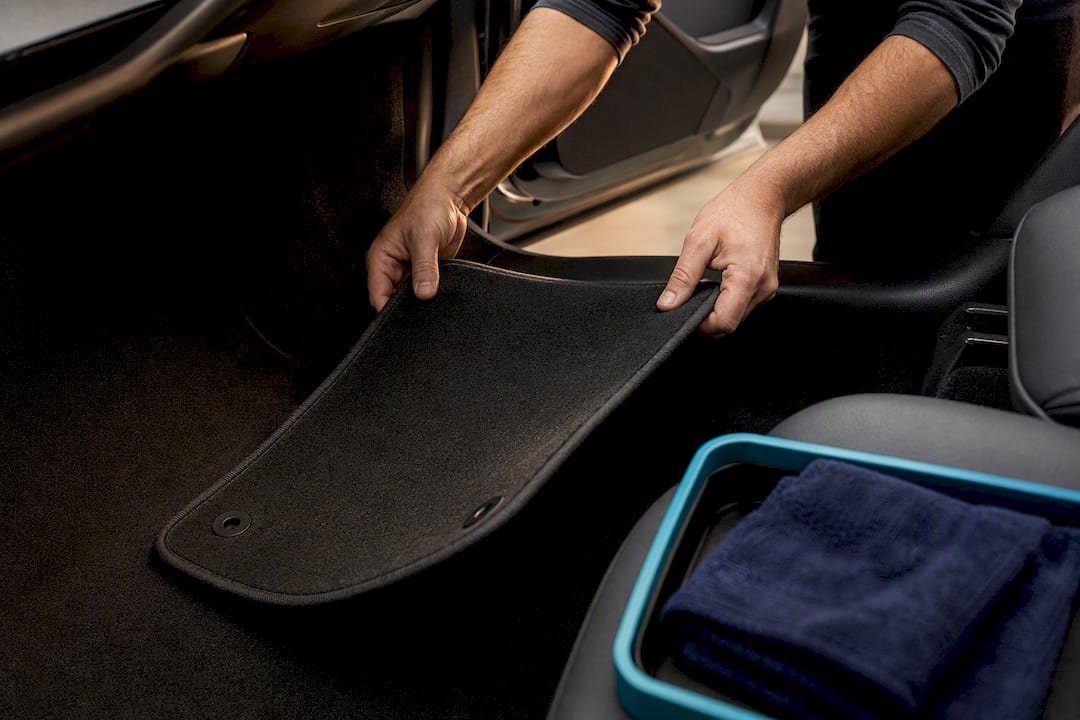
For vehicles, empty the trunk and glove compartment, remove floor mats and any aftermarket seat covers, and note whether the cabin air filter has ever been replaced. For homes, make sure the technician can access the HVAC system, attic, or crawlspace if the odor might be traveling through ductwork. Turn off any air purifiers or scented plug-ins beforehand too. Those devices mask the very odor the technician needs to trace, and they can throw off an initial inspection enough to send the whole job in the wrong direction.
What Are the Real Limitations of Professional Odor Removal?
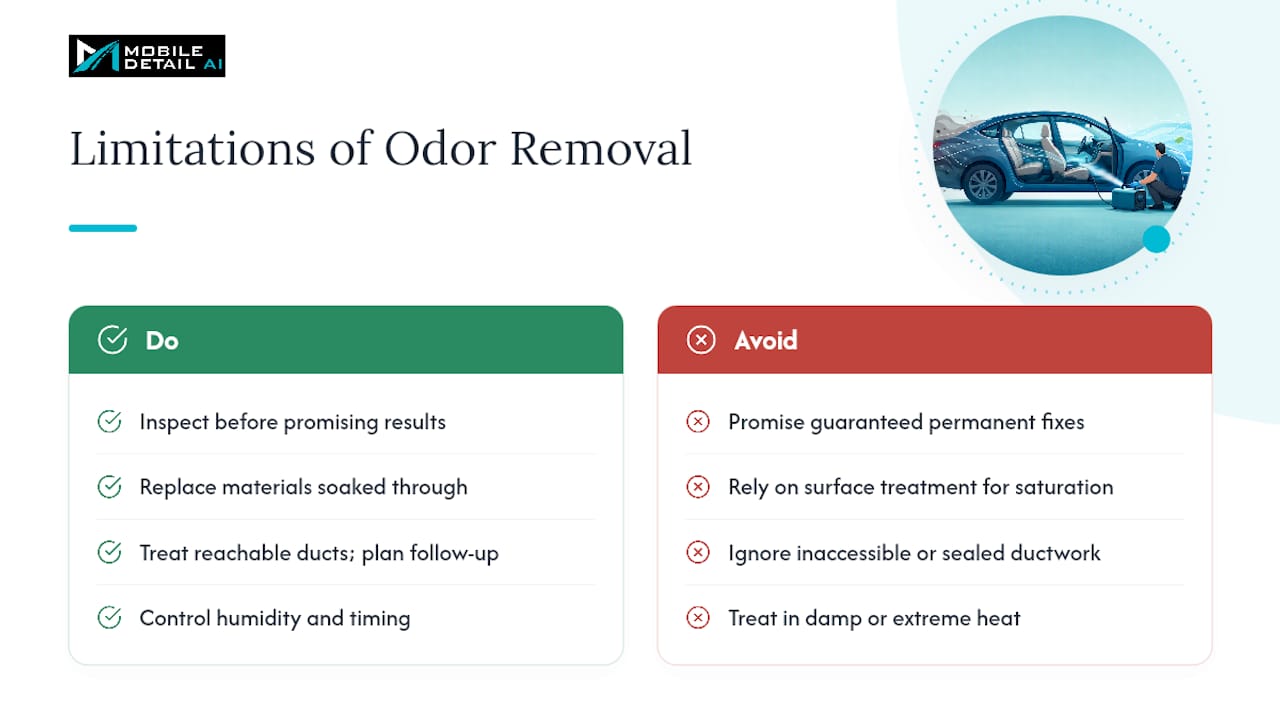
Odor removal isn't magic, and any provider who promises a guaranteed permanent fix without inspecting the space first is overselling. The biggest limitation is material saturation. If urine has soaked through carpet, padding, and into a subfloor, no amount of surface neutralization reaches that deep. At some point the only real fix is replacing the material, not treating it.
Ductwork is another limiting factor. Odors traveling through a home's HVAC system can hide in sections of ductwork that are difficult or impossible to access without partial demolition. A technician can treat what they can reach, but sealed sections sometimes require a follow-up visit once other work exposes them.
Humidity and weather also affect results. Ozone and hydroxyl treatments both work better in controlled conditions, and a job done in a damp basement or a car parked in direct heat may need a second pass. Timing matters too: treating an odor immediately after the source event usually works faster than treating one that's had months or years to embed.
Finally, no treatment prevents recontamination if the underlying cause isn't addressed. Treating smoke odor in a home where someone continues smoking indoors, or treating pet odor without addressing a litter box or bathroom habit issue, just resets the clock. Professional treatment removes what's already there; it doesn't stop new odor from starting the same cycle over again.
When Is It Time to Stop DIY and Call a Professional?
A few clear signals tell you DIY has run its course. If you've cleaned a spot three or four times and the smell returns within days, the contamination has gone deeper than surface cleaning can reach. If the odor gets worse with humidity or heat, that's often a sign it's embedded in padding, foam, or subfloor material where moisture reactivates trapped compounds.
Any odor tied to mold, sewage, or decomposition should go straight to a professional, no DIY attempt first. These aren't just smell problems; they're often health and structural issues that a scented candle won't solve and that can get worse the longer they sit untreated.
Selling a home or listing a rental is another trigger point. Buyers and renters notice odors fast, and a botched DIY attempt that leaves a faint chemical smell layered over the original problem can hurt a listing more than doing nothing at all. If you've already spent money on air fresheners, enzyme sprays, and baking soda with no lasting change, that's usually the clearest sign the smell has moved past what home remedies can fix. At that point, calling a pro isn't giving up. It's the faster, cheaper path to actually solving it.
A Publisher's View on Vehicle Odor Workflows
Finding a detailer who actually knows the difference between masking and neutralizing shouldn't take five phone calls and a leap of faith. Connecting vehicle owners directly with vetted professionals who follow the extraction-then-neutralization sequence this article outlines, not just the quick-spray version, is important. That vetting matters more in odor removal than almost any other detailing service, because a rushed or under-equipped job often makes the smell harder to remove the second time around.
— Mobile
Ready to Book a Vetted Odor Removal Detailer?
If your car still smells like the last owner's cigarettes or your dog's last muddy adventure, you've got two paths: keep guessing with air fresheners, or book someone who actually does this for a living. 
Mobile Detail AI is the faster route to the second option. Instead of calling around and hoping a detailer answers, you compare vetted local pros, see what equipment and process they use, and book instantly through the platform. Request an on-site estimate, ask the provider directly about their ozone and hydroxyl equipment using the questions from this guide, and compare scopes before committing to anyone. Find a vetted detailer near you and get your cabin's odor problem handled the right way the first time.