

Require a deposit to hold every slot, give customers a 24-hour cancellation window (48 hours for jobs over $200), and mark the appointment a no-show 15 minutes past the scheduled time with the deposit forfeited. That single sentence, printed on your booking page and repeated in your confirmation text, is the whole policy. Everything below just tells you how to build it, price it, and get customers to actually respect it.
TL;DR:
- Deposits should be scaled according to job value, with clear cancellation windows of 24 hours for jobs under $300 and 48 hours for larger projects.
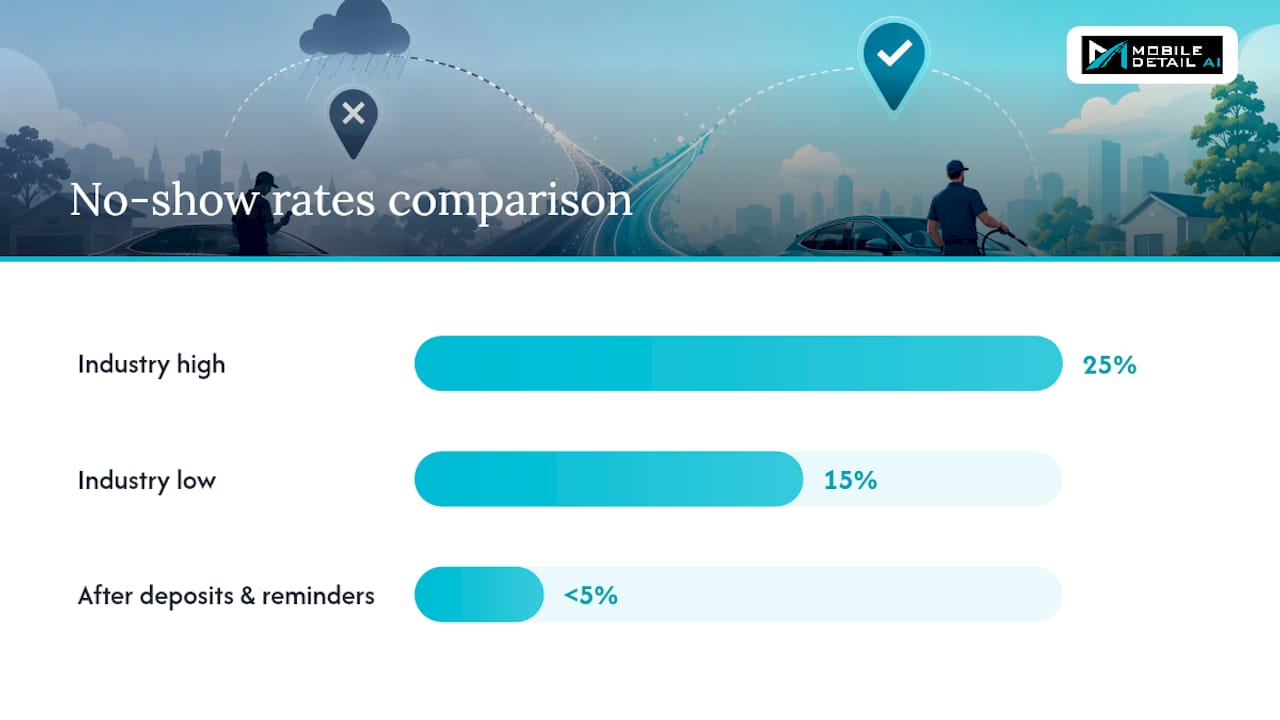
- Implementing automated reminders significantly reduces no-show rates from up to 25 percent to below 5 percent, improving scheduling consistency.
- The policy must define specific terms, including what constitutes a no-show, late arrival, and how weather or access issues are handled, with documentation for disputes.
- Recordkeeping of confirmations, reminders, and access issues is essential for enforcement and defending charges in case of customer disputes.
- Enforcing policies consistently helps protect profit margins and scheduling reliability, especially when combined with automated systems and clear customer communication.
Table of Contents
- What a No-Show Actually Costs You
- What Every Detailer No-Show Policy Needs to Cover
- Copy This: No-Show Policy Templates by Service Tier
- Collecting Deposits and Enforcing the Policy Without a Fight
- The Reminder Sequence That Stops Forgetful No-Shows
- Handling Weather and Access Problems Fairly
- Tracking Repeat Offenders Without Extra Software
- Owner Perspective: Enforcement Protects the Business You Built
- Automating Your No-Show Policy So You Don't Have to Chase It
- Sources
- FAQ
What a No-Show Actually Costs You
A no-show isn't just a missed $250 job. It's the drive time to the location, the twenty minutes spent loading and unloading water tanks, extractors, and pads, and the setup time you can't bill anyone for. Add the fact that the slot is now unsellable to anyone else that day, and the real damage looks nothing like the invoice total.
Run the math on a standard mobile detail:
- Drive time (round trip): 30 to 45 minutes
- Equipment load/unload: 15 to 20 minutes
- Onsite setup before you realize no one's home: 10 to 15 minutes
- Lost opportunity cost: a full slot that could've gone to a paying customer
A $250 job can approach a $400 real loss once you count drive, setup, and the slot you can't rebook on short notice.
The fix already has a track record. Pairing deposits with automated reminders drops no-show rates from the industry-typical 15 to 25 percent down to under 5 percent. That's the difference between a rounding error and a real hole in your monthly revenue.
What Every Detailer No-Show Policy Needs to Cover
A policy that holds up isn't a paragraph of vague warnings. It's a checklist of specific, enforceable terms that a customer can read in under a minute and a dispute-handler (probably you) can point to later.
Every solid no-show policy for detailers needs these pieces:
- Clear definitions. Spell out what counts as an "appointment," a "no-show" (customer absent or unreachable at the scheduled time), and a "late arrival" (customer present but the vehicle isn't ready).
- Cancellation windows. State the exact notice required, tied to job value, and what happens to the deposit inside versus outside that window.
- Deposit terms. Flat dollar amount or percentage, and whether it's refundable, credited toward future service, or forfeited outright.
- Access and prep requirements. Water access, power outlet, and parking space the customer must provide, plus a prep fee if those aren't ready.
- Weather and reschedule rules. Who calls a weather delay and how the deposit carries forward.
- Agreement capture. A checkbox at booking or a signed line on an invoice that shows the customer saw and accepted these terms.
- Refund and dispute process. A short, plain description of how a customer contests a charge and what evidence you'll use to respond.
Pro Tip: Put the policy in three places, not one: the booking page, the confirmation email or text, and a one-line reminder in the "on my way" message. Customers who see it three times rarely claim they didn't know.
Copy This: No-Show Policy Templates by Service Tier
You don't need a lawyer to write your first version. You need language that matches the job's stakes. Deposits should scale with what's actually at risk in setup time and opportunity cost — a $30 wash and a $600 ceramic coating job don't belong under the same rule.
- Wash or interior-only jobs (under $100). "No deposit required for standard washes. A no-show or cancellation inside 12 hours may result in a $25 fee applied to your next booking." Low stakes, light enforcement, just enough friction to discourage flaking.
- Full detail jobs ($100 to $300). "A moderate deposit (or a reasonable percentage of the service total) is required to confirm your appointment. Cancellations made less than 24 hours before the scheduled time forfeit the deposit. No-shows are billed the full deposit amount and must rebook with prepayment." This is your workhorse tier, so the language needs to hold up in a chargeback dispute.
- Paint correction, ceramic coating, or multi-day jobs ($300+). "A $150 deposit or 25% of the total invoice, whichever is greater, secures this appointment. Cancellations require 48 hours' notice. No-shows forfeit the full deposit, and rescheduling requires prepayment in full." Higher stakes mean a wider window and a bigger number.
Adjust deposit amounts to your market, but keep the structure clear and exact. Vague windows and soft language are what get policies ignored.
Collecting Deposits and Enforcing the Policy Without a Fight
The mechanics matter as much as the wording. Authorize the customer's card at booking rather than fully capturing the charge, then capture the deposit amount only if they no-show or cancel late. This keeps you compliant with most payment processors and gives customers a fair, visible paper trail if they push back.
Keep these records for every booking:
- Timestamped confirmation (email or SMS) showing the customer accepted the policy
- Reminder logs proving reminders were sent and when
- Photos or notes documenting access failures (no water, no power, gated lot)
- A record of the exact time you arrived and the time you marked the job a no-show
For repeat offenders, escalate deliberately: first offense gets a polite reminder of the policy, second offense requires a deposit on every future booking, third offense means prepayment in full or you decline the rebooking. If a customer disputes a charge with their bank, your documentation, not your memory, wins that argument.
Pro Tip: Screenshot the confirmation text every time. A dispute resolved in ten minutes with a screenshot beats one that drags out for three weeks over your word against theirs.
The Reminder Sequence That Stops Forgetful No-Shows
Most no-shows aren't malicious. They're forgetfulness, and forgetfulness is solvable with a reminder cadence that removes the customer's excuse.
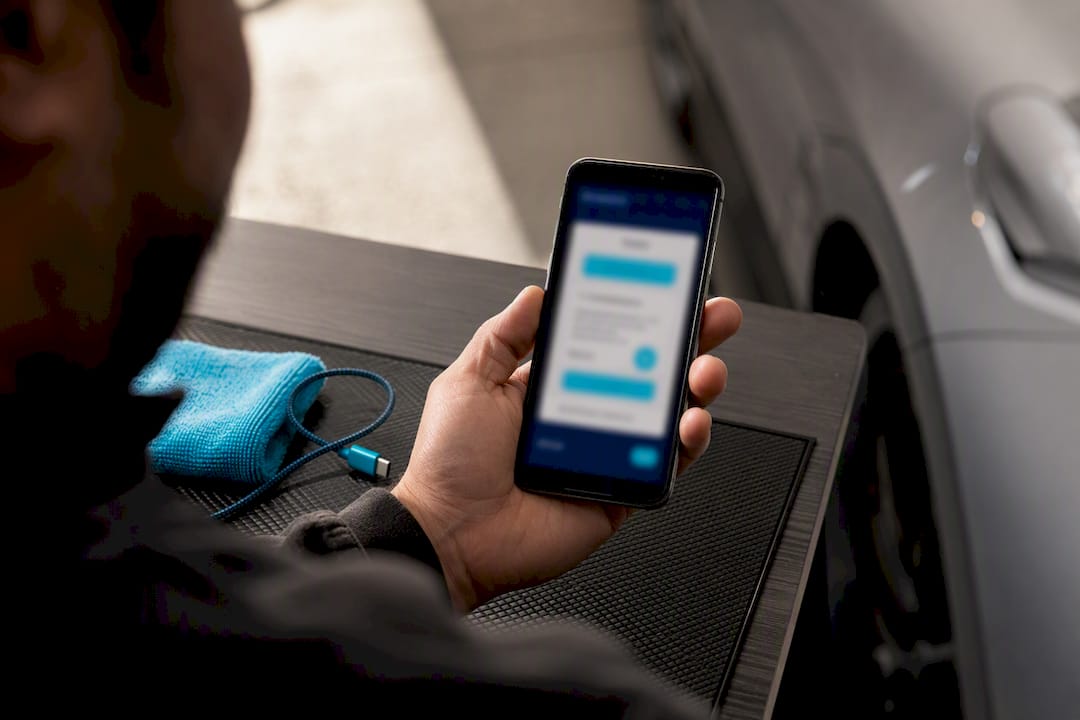
- Instant confirmation at booking. Confirms the time, address, and policy terms in writing the moment the appointment is set.
- 48-hour reminder. Includes a one-tap "confirm" or "reschedule" link so the customer commits again in writing, not just in memory.
- Morning-of or 2-hour reminder. A short text that asks for a "YES" reply, which creates a small psychological commitment that measurably raises show rates.
A three-touch sequence like this, run through automated reminder cadence rather than manual texting, is one of the highest-return habits in the business. Send an "on my way" text 20 to 30 minutes before arrival too. It gives the customer a last chance to flag a problem before you've burned the drive time.
Handling Weather and Access Problems Fairly
Mobile detailers carry a risk brick-and-mortar shops don't: you show up and there's no water, no outlet, or a locked gate nobody mentioned. That's not the same as a customer simply not showing up, and your policy should treat it differently.
- Weather calls. The detailer, not the customer, decides if conditions are unsafe for the job, and that call gets documented with a timestamp and a one-line note (rain, high winds, extreme heat).
- Access failures. If you arrive and can't access water, power, or the vehicle itself, charge a $35 to $50 preparation fee to cover the setup time and drive already spent.
- Deposit carry-forward. When you reschedule for weather, the deposit rolls to the new date automatically. The deposit only gets forfeited if the customer, not the weather, causes the second miss.
Tracking Repeat Offenders Without Extra Software
You don't need anything complicated to catch repeat no-shows. You need a habit of tagging the record every time one happens.
- Log the date, service type, and reason (no-show, late cancel, access failure) on every customer file.
- Flag the account after the first offense so it's visible before you confirm the next booking.
- Apply a simple three-strike rule: first offense is a warning, second requires a deposit on every future job, third means prepayment in full or you decline the booking.
- Announce policy changes to existing customers by text or email before they take effect, so nobody feels ambushed by a new deposit requirement.
Owner Perspective: Enforcement Protects the Business You Built
Enforcing this consistently isn't about punishing customers. It's about protecting the margin and the schedule that keep your business running. Make room for real emergencies, but hold the line on habitual no-shows. Firm, respectful, and predictable beats flexible and broke.
— Mobile
Automating Your No-Show Policy So You Don't Have to Chase It
Writing the policy is the easy part. Enforcing it every single week, chasing deposits, sending reminders, tagging repeat offenders, is where most detailers quietly give up and eat the loss instead. A platform is available to help solo detailers and multi-van operations manage no-show policies more effectively.

The platform's booking flow collects deposits automatically at the time a customer schedules, sends the confirmation, 48-hour, and morning-of reminders without you lifting a finger, and gives customers a one-tap reschedule link instead of a phone call you'll never get. Its CRM tags repeat no-shows on the customer's record automatically, so the second offense triggers a deposit requirement without you having to remember who flaked last month. Fewer disputes, less time spent chasing payments, more slots that actually stay filled. If commercial or fleet accounts are part of your book, pair your policy with clear service terms for fleet customers so multi-vehicle bookings carry the same protection. Set up a Mobile Detail AI account and turn your no-show policy into something that enforces itself.
Sources
- Mobile Auto Detailer No-Show Policy: What to Charge and How to Enforce It | GrabMySlot
- How to Reduce No-Shows at Your Detailing or Protection Shop | OxMotive
FAQ
What Is a Reasonable Cancellation Policy for Detailers?
A 24-hour notice window for standard jobs and 48 hours for services over $200 is standard across the industry, with the deposit forfeited for cancellations inside that window.
How Much Should You Tip on a $200 Car Detail?
Tipping isn't part of a no-show policy, but as a general guideline, 15 to 20% ($30) is typical for a $200 detail when service quality meets expectations.
What Is a Typical No-Show Wait Time Before Charging a Fee?
Most detailers mark an appointment a no-show 15 minutes past the scheduled arrival time if the customer is unreachable, at which point the deposit is forfeited.
Can You Give an Example of a 24-Hour Cancellation Policy?
"Cancellations made at least 24 hours before your scheduled appointment receive a full deposit refund. Cancellations inside 24 hours, or no-shows, forfeit the deposit in full."
Does Automation Actually Reduce No-Shows for Detailers?
Yes. Automated reminders paired with deposits typically cut no-show rates from 15 to 25 percent down to under 5 percent, largely because reminders go out reliably instead of depending on a busy detailer remembering to text.