
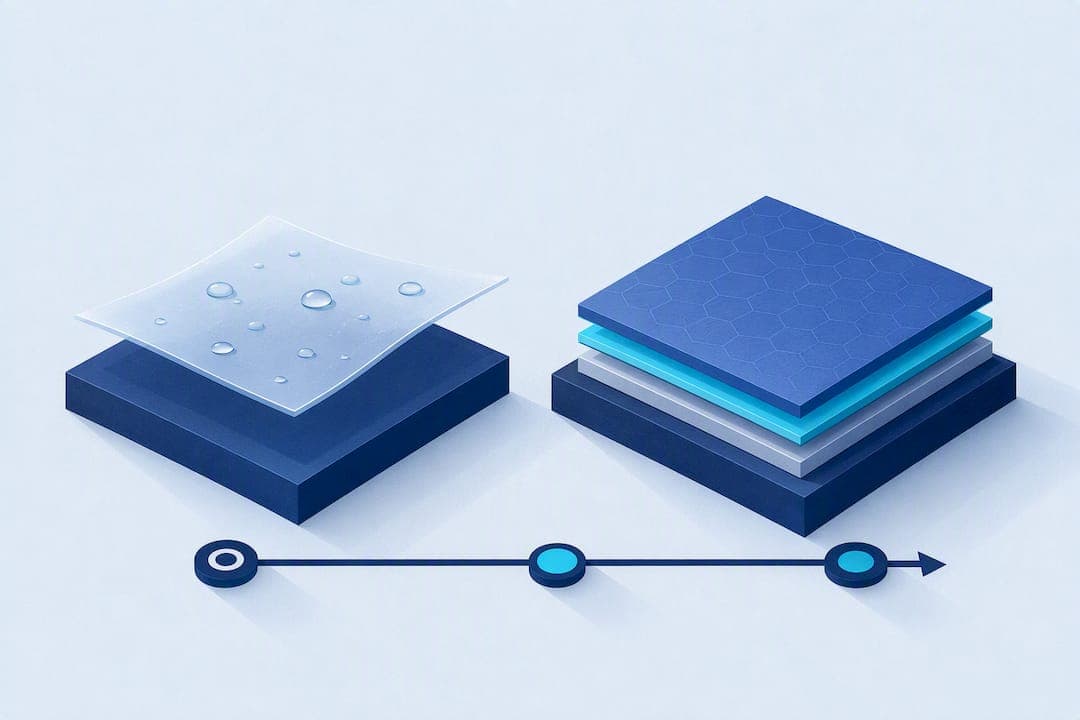
Ceramic coating beats wax on nearly every measurable protection standard: durability, chemical resistance, and hydrophobic performance. The trade-off is real, though. Coatings cost more upfront, demand paint correction beforehand, and punish sloppy prep. Wax still wins for short-term ownership, tight budgets, or drivers who just love that deep carnauba glow more than they care about a two-year warranty.
TL;DR:
- Professional ceramic coatings typically last between 2 to 7 years, with longevity influenced by climate, maintenance routine, and initial paint correction quality.
- True ceramic coatings chemically bond to the paint and require careful prep, while many "ceramic-infused" products are wax-like and last only a few months.
- Regular washing with pH-neutral soap and avoiding automatic brushes extend the protection lifespan for both coatings and waxes, but coatings demand more precise maintenance.
- Initial costs for professional ceramic applications are high but can be more cost-effective over multiple years compared to repeated wax jobs, especially in harsh environments.
- Deep scratches and rock chips will damage either product, and ceramic coatings do not replace physical protective films like paint protection film for impact resistance.
Table of Contents
- Ceramic Coating vs Wax: What's Actually Happening on Your Paint
- How Long Does Ceramic Coating (and Wax) Actually Last?
- What Does Ceramic Coating Cost vs Wax, Really?
- Washing and Maintaining a Coated Car vs a Waxed One
- Getting the Application Order Right: Prep Before Protection
- What Neither Product Protects Against
- Choosing Between Ceramic Coating and Wax for Your Situation
- Our Take: The Real Decision Isn't Ceramic vs Wax, It's Time Horizon vs Effort Tolerance
- Sources
Ceramic Coating vs Wax: What's Actually Happening on Your Paint
Wax and ceramic coating solve the same problem in completely different ways, and that difference explains almost everything else in this comparison.
Wax is a topical product. Whether it's natural carnauba or a synthetic polymer sealant, it sits on top of the clear coat, filling tiny surface imperfections and creating a barrier that beads water and adds gloss. It never bonds to the paint. It just sits there, which is exactly why it's easy to apply, easy to remove, and easy for the elements to strip away. Heat softens it. Rain and UV rays break it down. A few trips through an automatic wash and it's noticeably thinner.
Ceramic coating works on a molecular level. Most quality coatings are built on silicon dioxide (SiO2), and when applied correctly, they form actual chemical bonds with the clear coat through a process closer to curing than drying. That chemical bond creates a hard, glass-like layer instead of a wax film, and it's the reason coatings shrug off bird droppings, bug guts, and tree sap that would eat into unprotected paint or degrade wax within days.
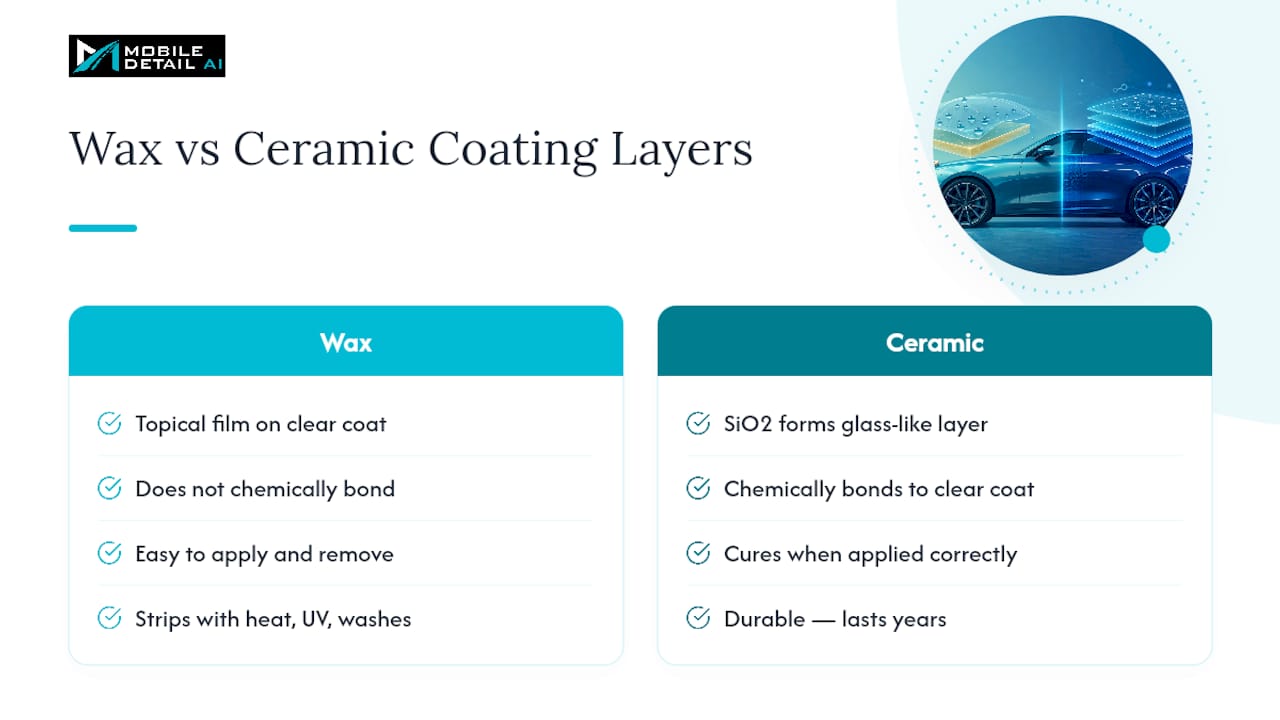
One warning worth flagging here: plenty of "ceramic wax" or "ceramic-infused" products on shelves are not true coatings. Most contain a small fraction of SiO2 blended into a wax or sealant base, and they perform closer to a sealant than a real coating, typically lasting a few months rather than years. If a product promises coating-level durability at wax-level prices and effort, read the label twice.
Neither product is a force field. Ceramic coating won't stop a rock chip from a highway pebble, and wax won't fill a deep scratch that's already cut through the clear coat. Both are chemical and UV shields, not armor plating.
How Long Does Ceramic Coating (and Wax) Actually Last?
Lifespan claims in this industry get thrown around loosely, so here are the realistic bands based on product type and application method:
- Carnauba wax: typically lasts a few weeks before noticeable breakdown
- Synthetic sealant: generally lasts several months with normal use
- DIY ceramic coating kit: often lasts from one to a few years depending on prep quality
- Professional ceramic coating: 2 to 7 years, with some premium installs carrying manufacturer warranties toward the higher end when maintenance schedules are followed
Those ranges swing hard based on where and how the car lives. UV exposure is the biggest single factor. A car parked outside in a sunny climate is going to see faster breakdown of both wax and coating than one that spends most of its life in a garage. Owners in harsh climates or who park outdoors get disproportionately more value from ceramic coating simply because the UV and chemical resistance gap widens under stress.
Acid rain, road salt in winter climates, and tree sap all accelerate breakdown too. So does washing habit. Frequent trips through automatic brush car washes are brutal on both products, wearing down wax within weeks and dulling even a quality coating's hydrophobic properties well ahead of schedule.
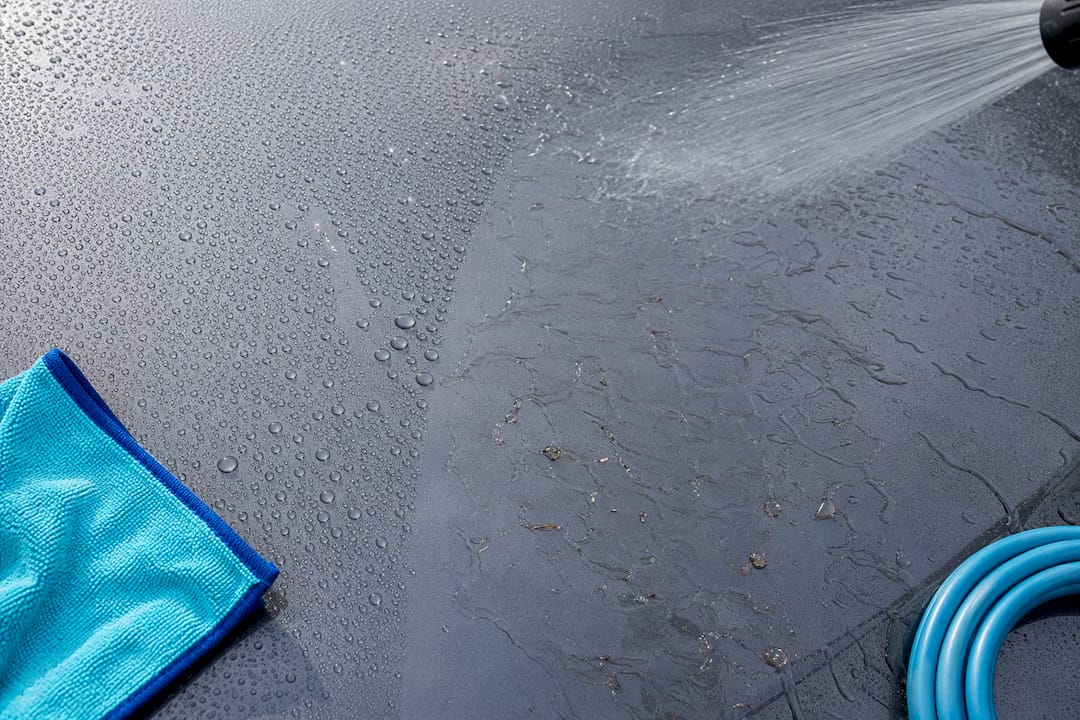
"Failure" doesn't mean the coating peels off in sheets. It shows up gradually: water stops beading into tight little balls and starts sheeting flat, gloss looks a little duller under direct sun, and contaminants start clinging instead of sliding off during a rinse. At that point, a maintenance spray or booster product can often extend usable life without a full reapplication. Wax failure looks similar but happens faster and is usually solved with a quick reapplication rather than a booster.
The gap between DIY and professional ceramic coating isn't just marketing. Professional-grade coatings often use higher SiO2 concentrations and get applied under controlled shop conditions, which is a meaningful part of why pro installs can outlast DIY kits by years rather than months.
What Does Ceramic Coating Cost vs Wax, Really?
Sticker price tells you almost nothing useful here. The number that matters is cost per year of protection, and that's where the math gets interesting.
Here's what you're actually looking at upfront:
- DIY wax jar: affordable, generally costing a modest amount
- Professional wax application: moderate cost, varying by service and location
- Synthetic sealant: usually costs a small to moderate amount
- DIY ceramic coating kit: typically moderately priced
- Professional ceramic coating install: can be costly, often running into several hundreds or low thousands dollars depending on preparation and product quality
That professional ceramic number looks jarring next to a $20 wax bottle until you divide by years of service instead of looking at the invoice in isolation. Repeated professional wax jobs over several years can accumulate high costs and time commitment. In contrast, a professional ceramic coating install, despite higher upfront cost, may offer better long-term value through extended protection and reduced maintenance demands.
Pro Tip: Don't just compare product prices. Compare total five-year cost including reapplication labor, either yours or a detailer's hourly rate. Wax almost always loses that math past year two.
Amortizing coating cost over multiple years typically favors ceramic for owners who keep their vehicles three or more years. If you flip cars every 12 to 18 months, that math flips too. Wax or a synthetic sealant probably gets you through the ownership window without ever needing to amortize anything.
Watch for hidden costs on the ceramic side. Paint correction before application, if your car has swirl marks or oxidation, can add $150 to $600 depending on severity. pH-neutral wash soap and ceramic-specific boosters aren't expensive individually, but they add up. Some professional warranties also require an annual maintenance visit to stay valid, which is a recurring cost many buyers don't budget for at purchase time.
Washing and Maintaining a Coated Car vs a Waxed One
The weekly routine changes more than most first-time coating buyers expect.
Coated cars have real washing rules. Stick to pH-neutral soap, skip abrasive brushes entirely, and use proper two-bucket mitt technique to avoid introducing swirl marks into that hard, glassy surface. A ceramic-safe spray topper between full washes helps refresh hydrophobic behavior and extends the interval between deeper cleans.
Wax needs a different kind of attention, mostly because it's simply less durable:
- Reapply carnauba wax every 4 to 8 weeks for consistent protection.
- Wash with a dedicated car soap, not dish detergent, since high-pH cleaners strip wax fast.
- Avoid parking under direct sun for extended periods immediately after application, since heat accelerates breakdown.
- Skip the automatic brush wash and hand wash or use a touchless system instead.
That last point applies to both products, not just wax. Coated cars specifically need pH-neutral soap and gentle mitts because harsh detergents and rough brushes strip hydrophobic properties over time even though the underlying bond stays intact.
One question comes up constantly: can you wax over a ceramic coating to boost shine or add extra protection? Generally, no. Wax can't bond to a cured SiO2 surface, so it just sits on top temporarily and wipes away within a wash or two, wasting product and money. If you want a gloss boost on a coated car, use a ceramic-specific spray booster instead of traditional wax.
Pro Tip: Keep a soft-bristle detail brush and a pH-neutral quick detailer in your trunk. Coated or waxed, a fast wipe-down after a road trip does more for longevity than most people realize.
Getting the Application Order Right: Prep Before Protection
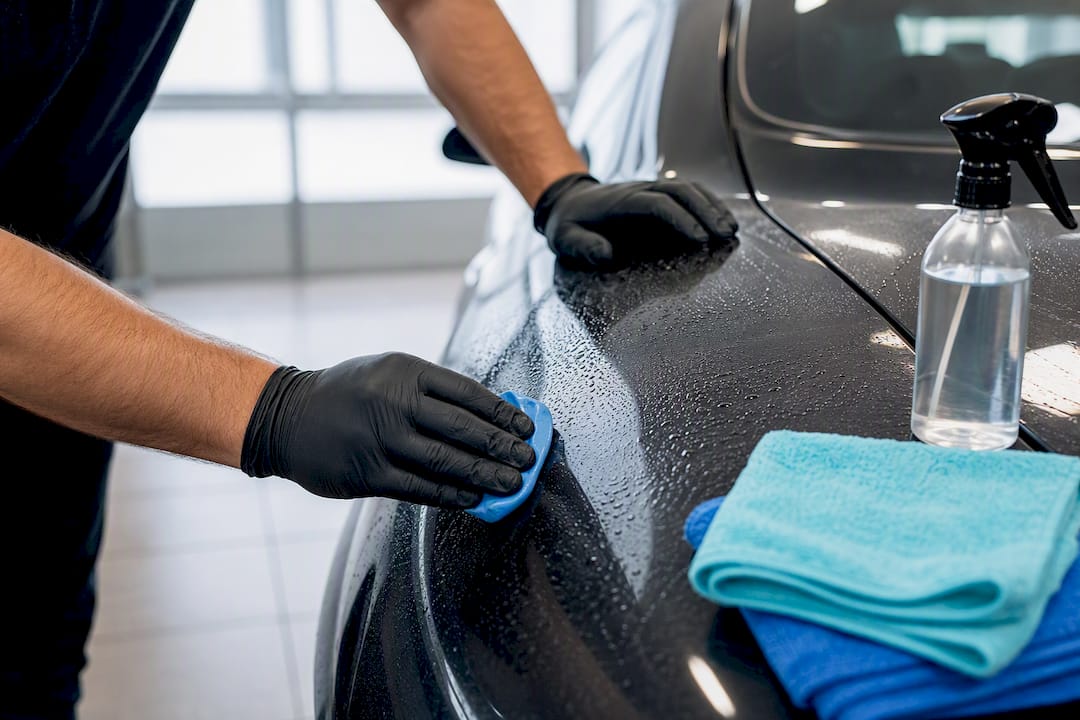
The single most important rule in this entire comparison: never wax a car right before ceramic coating it. Coatings need to bond directly with bare, decontaminated paint, and any wax residue on the surface blocks that bond and ruins adhesion. If you've been waxing regularly and want to switch to ceramic, plan for a full strip and prep cycle first.
Correct prep follows a specific order:
- Full wash to remove loose dirt and grime.
- Chemical decontamination and clay bar treatment to pull embedded contaminants out of the clear coat.
- Machine polish or full paint correction if swirl marks, oxidation, or light scratches are present.
- Isopropyl alcohol wipe-down (panel prep) to strip any oils or residue right before application.
- Controlled application in a dust-free environment, working in sections to avoid high spots.
- Cure time, often 24 to 48 hours before the first light rain exposure and up to a week before a full wash, depending on the product.
Application effort differs dramatically by product: wax or sealant takes 30 to 60 minutes start to finish, while a DIY ceramic kit runs 4 to 8 hours including prep, with multi-day cure restrictions afterward.
DIY kits carry real risk if you rush the clay and polish steps. High spots, streaking, and uneven curing are common mistakes that shorten the coating's effective life. Professional installs control humidity, temperature, and dust during application and typically back the work with a written warranty, which is usually worth the price premium if you're keeping the car long term.
What Neither Product Protects Against
Rock chips and deep scratches don't care whether your car is waxed, sealed, or ceramic coated. Coatings add surface hardness but remain a thin chemical layer, not a physical cushion, so highway debris and parking lot mishaps still reach bare metal or primer the same way they always have. If you drive a lot of highway miles or own something you genuinely don't want chipped, paint protection film on the hood, front bumper, mirrors, and rocker panels is the actual answer, not a thicker coating.
This is also why paint correction before coating isn't optional if your paint has existing damage. A ceramic coating locks in whatever is underneath it. Swirl marks, light scratches, water spots, and oxidation all get sealed in place and become noticeably harder to remove later, since you're now polishing through a cured layer to get at the original clear coat.
For owners who can't justify full ceramic coating costs but want more than wax, a synthetic sealant is a reasonable middle ground. It won't match ceramic's chemical resistance or longevity, but it outlasts wax by months and costs a fraction of a professional install. Combining PPF on impact-prone panels with ceramic coating everywhere else covers both failure modes coatings and wax simply can't touch on their own.
Choosing Between Ceramic Coating and Wax for Your Situation
Match the product to how you actually own and drive the car, not to whatever a detailer's upsell script pushes hardest.
- Short-term ownership (under 2 years) or a lease: A quality synthetic sealant or DIY wax routine covers the ownership window without wasted spend on coating you won't keep long enough to amortize.
- Daily driver in a harsh climate: Professional ceramic coating earns its keep here through UV and chemical resistance that wax simply can't match season after season.
- High-value or collectible vehicle: Professional ceramic coating with full paint correction beforehand, since flawless prep matters more than cost at this tier.
- Time-pressed owner who hates weekend maintenance: Ceramic coating cuts washing frequency and eliminates the monthly reapplication cycle wax demands.
- Budget-limited DIY enthusiast: A DIY ceramic kit can actually be the best cost-per-year option if you're willing to put in real prep time and accept a learning curve on application.
Before booking anything, ask a detailer these questions directly: Is paint correction included in the quoted price, or is it billed separately? What's the expected cure time before the car can get wet or be driven in traffic? What are the written warranty terms, and does it require an annual maintenance visit to stay valid? What's the actual SiO2 percentage in the product being used, and what post-care routine do they recommend?
Treat vague answers as a warning sign. A detailer who won't commit to a specific lifespan range, has no written maintenance requirement tied to their warranty, or tries to talk you out of paint correction before coating is cutting corners somewhere, and it usually shows up in the results within a year.
Our Take: The Real Decision Isn't Ceramic vs Wax, It's Time Horizon vs Effort Tolerance
Most of the debate around ceramic coating vs wax treats it like a religious argument, when it's really just an ownership math problem dressed up as a product comparison. Once you frame it as cost per year of protection against how much weekend maintenance you're willing to tolerate, the "which is better" question mostly answers itself based on your own habits, not on which product has better marketing.
What gets underestimated constantly: prep quality matters more than product choice. A rushed ceramic install on unclayed, unpolished paint will underperform a properly applied synthetic sealant, full stop. The chemistry only works if the surface underneath is actually ready for it.
A professional platform exists to connect car owners with vetted detailers, offering instant booking and providing providers with integrated CRM features for scheduling and route optimization to help keep appointments on track. Real-time service updates and vehicle history tracking help ensure continuity with each booking.
Before your appointment, wash the car yourself if you can and clear the interior so the detailer can focus entirely on paint. On service day, ask to see the paint before and after correction under sunlight or a swirl-finder light. That single habit catches more shortcut jobs than any warranty document ever will.
— Mobile